THROUGHOUT MY LIFE AND CAREER, I HAVE come to recognize a consistent and unavoidable pattern. Every meaningful chapter unfolds in three distinct phases: the dream, the struggle, and the victory. These phases are not random. They are sequential. More importantly, they are proportional. The dream, the struggle, and the victory are always the same size. Yet, most of us wish they were not.
We want expansive dreams, minimal struggle, and overwhelming victory. We want extraordinary outcomes without enduring extraordinary demands. Experience has taught me that this expectation is unrealistic. If we desire a significant victory, we must be prepared for a significant struggle. The magnitude of the reward is inseparable from the magnitude of the effort required to achieve it.
The question each of us must confront is simple: Where are you right now? Are you in the dream, in the struggle, or in the victory?
Every doctor of chiropractic remembers the original dream. Before the boards, before clinic hours, before the business plans and lease negotiations, there was an idea, a vision of what life and practice could become. You envisioned professional independence. You imagined caring for patients and miracles happening. You saw yourself building something meaningful, something ethical, something that allowed both income and autonomy. The dream was not small. It was ambitious, personal, and deeply motivating.
But the moment you committed to chiropractic college, you unknowingly committed to the corresponding struggle. Long hours in anatomy lab. Biochemistry exams that tested your limits. Financial strain. Personal sacrifice. Emotional fatigue. Relationships tested by time constraints and stress. I sold newspapers to help put myself through chiropractic school.
The struggle was real and, at times, overwhelming. Then came the victory. You walked across a stage. You received your Doctor of Chiropractic degree. That moment symbolized more than academic achievement; it represented entry into a profession that allows independence, service to others, meaningful income potential, and control over one’s schedule and future. The victory matched the struggle.
The size of your accomplishment was directly related to the size of the effort required to achieve it. What many fail to recognize, however, is that graduation was not the final victory. It was merely the conclusion of one cycle and the beginning of another.
In my own career, the most transformative growth did not occur during the dream phase or even during the celebration of victory. It occurred in the struggle.
Years ago, I developed a new dream: to become a chiropractic scientist. I wanted to understand more deeply the biomechanical and neurophysiological mechanisms underlying what we do. I wanted to elevate our profession’s scientific credibility and contribute research that could withstand the highest levels of scrutiny. I envisioned chiropractic research presented in the world’s most respected scientific forums.
That vision inspired me. The struggle that followed refined me. While maintaining a private practice, raising a family, and serving as CEO of Neuromechanical Innovations, lecturing and training doctors internationally, I enrolled in the PhD program in Kinesiology at Arizona State University. A program typically completed in four to five years required ten years of my life.
Ten years of coursework, laboratory research, statistical analysis, manuscript preparation, and revision. Ten years of early mornings and late evenings. Ten years of balancing personal life, professional responsibility with academic rigor.
During this period, I traveled globally to scientific conferences and assembled an interdisciplinary research team that included spine surgeons, biomechanists, neurophysiologists, and statisticians. Together, we pursued chiropractic research at the highest possible level.
The struggle intensified when my mentor, Dr. Tony Keller, a brilliant scientist and dear friend, was tragically murdered. His loss was personal and profound. Our profession lost a remarkable intellect, and I lost a trusted guide. There were moments when continuation felt almost unreasonable.
Yet struggle is not merely about workload; it is about endurance. It is about pressing forward when circumstances are painful, unexpected, or unfair. It is about honoring the dream even when motivation fluctuates.
The eventual victory was not accidental. We amassed over 50 peer-reviewed publications in respected scientific journals. We were honored with awards at major international conferences. I received invitations to lecture not only within chiropractic but also in orthopedics and biomechanics worldwide, and for the first time in history, the chiropractic profession was included in Spineweek, a combined meeting of over 20 medical and scientific spine societies in 2024. The victory was substantial. But it was precisely proportional to the struggle that preceded it.
Victory is gratifying, but it can also be deceptive. Achievement brings comfort. Recognition brings validation. Stability brings predictability. Yet if we linger too long in the victory phase, stagnation quietly replaces growth. Victory should be celebrated, but it should not become a permanent residence.
When one summit is reached, a new horizon must be identified. The leaders who continue to expand their influence are those who choose to dream again. For me, the next dream emerged outside the boundaries of healthcare and science. It was a vineyard and a winery.
Growing up, I frequently drove past the vineyards of the Finger Lakes while traveling to Ithaca College. I admired their symmetry, tranquility, and humble grandeur. In my late twenties, I began collecting Bordeaux wines. International travel exposed me to some of the world’s most celebrated wine regions, deepening both my appreciation and curiosity.
The dream formed gradually as I collected photos from my travels in a special folder called “Winery Inspiration.” In 2008, I purchased 100 acres of vacant land on the shores of Lake Ontario where I grew up, approximately an hour north of the famed Finger Lakes wine region. The vision was clear but the reality was far more complex.
Before planting a single vine, we were required to invest over $100,000 in site preparation and drainage tile installation that I had not anticipated. I hired vineyard management consultants from Cornell University to understand soil science, trellising systems, and climate considerations. I engaged a winemaker, designed labels, constructed storage facilities, developed marketing strategies, and built a tasting room. We hosted weddings in white tents before building an event center.
It required seven years to break even and nearly ten times the initial investment I had projected. The learning curve was steep, the financial risk substantial, and the emotional commitment unwavering. But the victories go along with the struggle. We live at the winery where we have been able to raise our family. My wife, Mindy, directs human resources and finance. We work together, and take our family on four to six vacations a year. We cherish these years. When I approached my wife with the question of where she would like to live and raise our family, she simply said, “wherever we are going to be able to see you most.” We have 900 feet of pristine water front where we are building a new home on the estate. It’s a dream come true.
Today, Colloca Estate Winery welcomes thousands of guests annually. Our waterfront property includes a tasting room, two restaurants, and hosts more than 50 weddings, festivals, and special events each year. Most meaningful to me is that the winery provides employment for over 100 individuals annually.
The victory was meaningful because the struggle was meaningful. And once that victory stabilized, a new dream emerged: the development of a hotel and resort on property. But, that’s a story for a different day.
As doctors of chiropractic, we are leaders regardless of whether we actively claim the title.
Patients seek clarity from us in uncertain times. Staff members depend on our direction. The broader profession benefits when we elevate standards and expand influence. Leadership requires intentional engagement in the dream-struggle-victory cycle.
“In each scenario, the victory corresponds directly to the investment made during the struggle.”
If you aspire to grow a larger practice, preparation must precede expansion. Growth may require reinvesting in advanced adjusting or diagnostic technology, modernizing your facility, or implementing data-driven systems that improve patient retention and outcomes. It may necessitate engaging a practice management consultant to refine workflows, strengthen financial oversight, and sharpen communication strategies. Sustainable growth results from deliberate infrastructure, not from hope alone.
If you envision multiple offices, the nature of your struggle evolves. Clinical excellence must be complemented by organizational architecture. Recruiting and mentoring associate doctors becomes essential. Standardized operating procedures must be documented. Financial reserves must be secured. Delegation becomes a discipline rather than a preference. Expansion requires transforming from primary provider to strategic leader. Stop putting off that weekly staff meeting or spinal care class. Schedule it. Execute it.
If your ambition includes influencing policy, conducting research, writing, or speaking nationally, your preparation must be even more rigorous. Advanced education, interdisciplinary collaboration, disciplined writing schedules, and resilience in the face of critique become non-negotiable. You may need to assemble research teams, partner with academic institutions, or submit your work to peer review. Influence is earned through sustained intellectual contribution and professional consistency.
In each scenario, the victory corresponds directly to the investment made during the struggle. Too often, we desire expanded outcomes without expanded responsibility. We seek recognition without refinement. Yet meaningful leadership demands both. The struggle is not a detour from success; it is the construction phase of success.
Most professionals are willing to dream. Many enjoy celebrating victories. Far fewer are willing to endure prolonged struggle. Endurance is the differentiator. The marketplace rewards consistency. Patients respond to stability. Teams flourish under steady leadership. Research advances through persistence. Businesses mature through disciplined reinvestment.
When obstacles arise (and they will) the determining factor is not initial enthusiasm but sustained commitment. The struggle is the tuition paid for meaningful accomplishment.
Perhaps you are in the dream phase, sensing that your current reality is smaller than your potential. If so, commit fully. Clarify the vision. Develop a plan. Prepare for the corresponding struggle.
Perhaps you are in the struggle phase, fatigued by financial pressure, staffing challenges, academic demands, or personal sacrifice. If so, recognize that difficulty is not evidence of failure, its evidence of growth. Continue. Refine. Adjust. Endure.
Perhaps you are in a season of victory, enjoying stability and achievement. If so, celebrate, but don’t settle. Identify the next horizon. New dreams prevent complacency and reignite purpose. It’s where we really live.
The dream, the struggle, and the victory are inseparable and proportional. The impact you ultimately have on your patients, your family, and your profession will never exceed the magnitude of the struggle you are willing to endure. So I return to the question: Where are you? And perhaps more importantly, how large is the next dream you are willing to pursue?
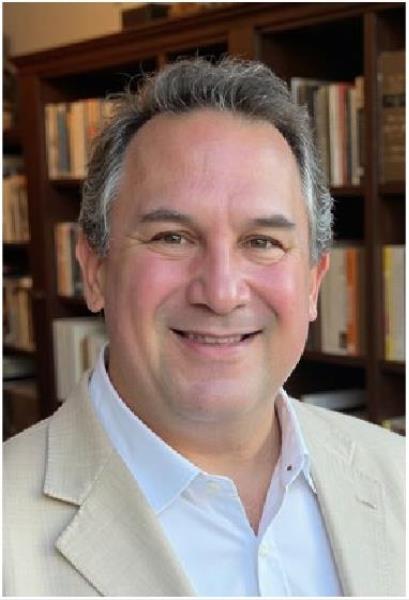
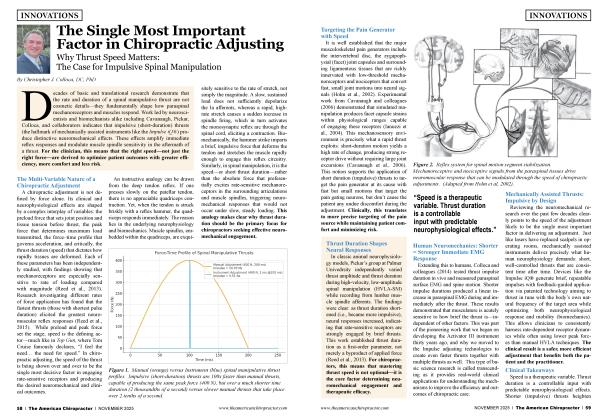
Dr. Chris Colloca is the CEO and Founder of Neuromechanical Innovations and inventor of the Impulse® family of chiropractic adjusting instruments in over 20,000 offices in over 50 countries providing approximately a Billion adjustments annually. More information can be found at www.neuromechanical.com and he can be reached at [email protected].