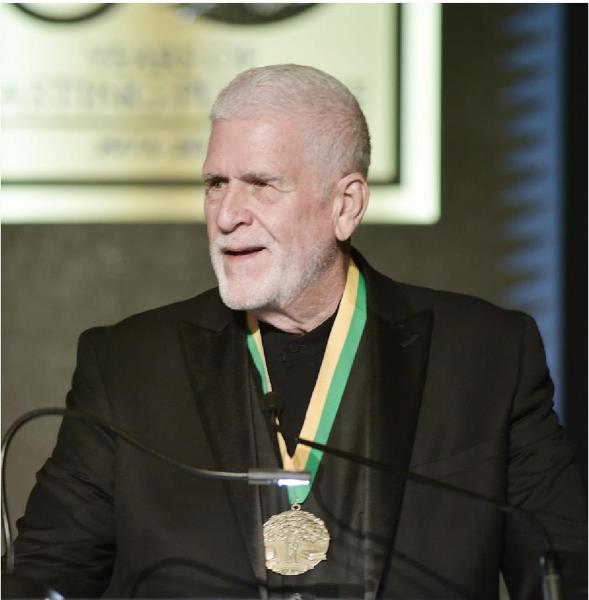
“He moved with a grace that made difficult things look effortless—a quality that later defined his presence on stage and in leadership.”
Dr. Guy F. Riekeman, 1950-2026, lived a life of wholehearted dedication to chiropractic and to humanity—a life in which vision, courage and an unwavering commitment to service were not abstract ideals, but daily practices that changed institutions and shaped generations of chiropractors.
Born in 1950 in New Mexico into a chiropractic family, Guy grew up surrounded by conversations about health, responsibility and the body's inborn wisdom. As a second-generation chiropractor, he breathed in the philosophy of vitalism long before he studied it formally, and those early years in the American Southwest gave him both a sense of possibility and a resilient spirit that would mark his leadership for decades to come.
He enrolled at Palmer College of Chiropractic in Davenport, Iowa—the Fountainhead of the profession—and graduated in the early 1970s. At Palmer he did far more than earn a degree. He absorbed a vision of what chiropractic could mean to the world and began to refine the communication and leadership skills that would later make him one of the most influential voices in the profession. Even then, it was clear that he was not content simply to practice; he was preparing to lead.
Before he became a global figure, he was known to many as Guy "Easy" Riekeman, a nickname earned on the basketball court. His play was smooth, fluid and deceptively relaxed; he moved with a grace that made difficult things look effortless. That same quality later defined his presence on stage and in leadership rooms—calm, composed, and yet utterly engaged.
Following graduation, he entered chiropractic practice for a time, where his gifts quickly became apparent. He was not only a skilled adjuster; he was a coimnunicator, an organizer, and a student of human behavior. He saw that for chiropractic to flourish, practitioners needed better tools to educate their patients, better systems to support their practices, and better coaching to help them live and lead congruently with their deepest values. That realization set him on a path from individual practice to profession-wide influence.
Driven by a conviction that great ideas must be communicated clearly and consistently, Guy helped create Renaissance, a pioneering chiropractic education company built with his friend and colleague Dr. Joe Flesia. Renaissance used
then-innovative video and media tools to bring chiropractic philosophy and patient education to life in practices around the world. It gave doctors language, images and stories to explain chiropractic not just as pain relief, but as a way of understanding life and health itself.
Building on that foundation, he launched Quest, a chiropractic coaching company that became one of the most respected practice-development organizations in the profession. Quest was never merely about numbers. It was about alignment—between purpose and procedures, philosophy and practice, innate potential and daily actions. Through Quest, Guy challenged chiropractors to grow businesses worthy of the principles they claimed to hold, and to measure success not only in collections, but in lives changed.
Guy was, at heart, a storyteller—and a lover of stories. His affection for movies was more than entertainment; he intuitively understood the power of narrative to shape culture and identity. That love of film culminated in his work helping produce a film for the chiropractic Centennial, a project that honored the profession's history and projected its promise into the future. Through that cinematic celebration, he invited chiropractors to see themselves as heirs to a noble legacy and stewards of a vital message humanity still desperately needs.
“Make Your Life Extraordinary was not a slogan; it was an instruction and a challenge to step beyond mediocrity toward a life of purpose, integrity and contribution.”
As an author, he captured his philosophy of life and leadership in his book Make Your Life Extraordinary. The title was not a slogan; it was an instruction and a challenge. Again and again, in his writing and his speaking, he called people to step beyond mediocrity and convenience toward a life of purpose, integrity and contribution. An extraordinary life, in his view, was not about fame or comfort; it was about how fully one chose to serve.
For more than four decades, Guy's voice resounded from stages across the chiropractic world. He became one of the profession's most recognized speakers, known for his ability to weave philosophy, science, humor and emotion into messages that left audiences not only informed but transformed. He spoke of innate intelligence, of responsibility, of the moral imperative to tell the chiropractic story with clarity and conviction. More importantly, he spoke in a way that made people feel seen, challenged and uplifted.
His storytelling was legendary. He could take a simple scene—a patient encounter, a historical vignette, a moment with his family—and turn it into a minor in which his listeners saw their own potential more clearly. The through-line of his communication was always the same: you are here on purpose; live like it. That message, delivered again and again, helped thousands of students and doctors reconnect with why they chose chiropractic in the first place.
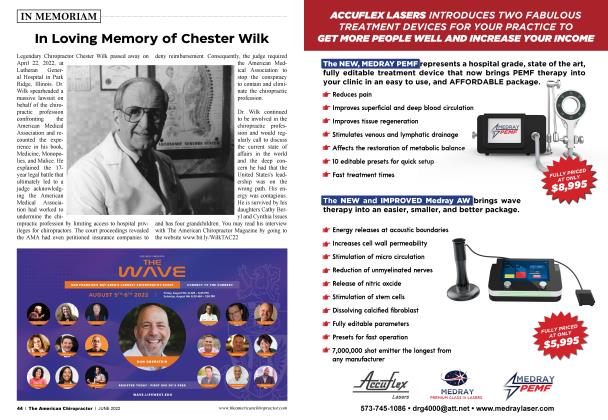
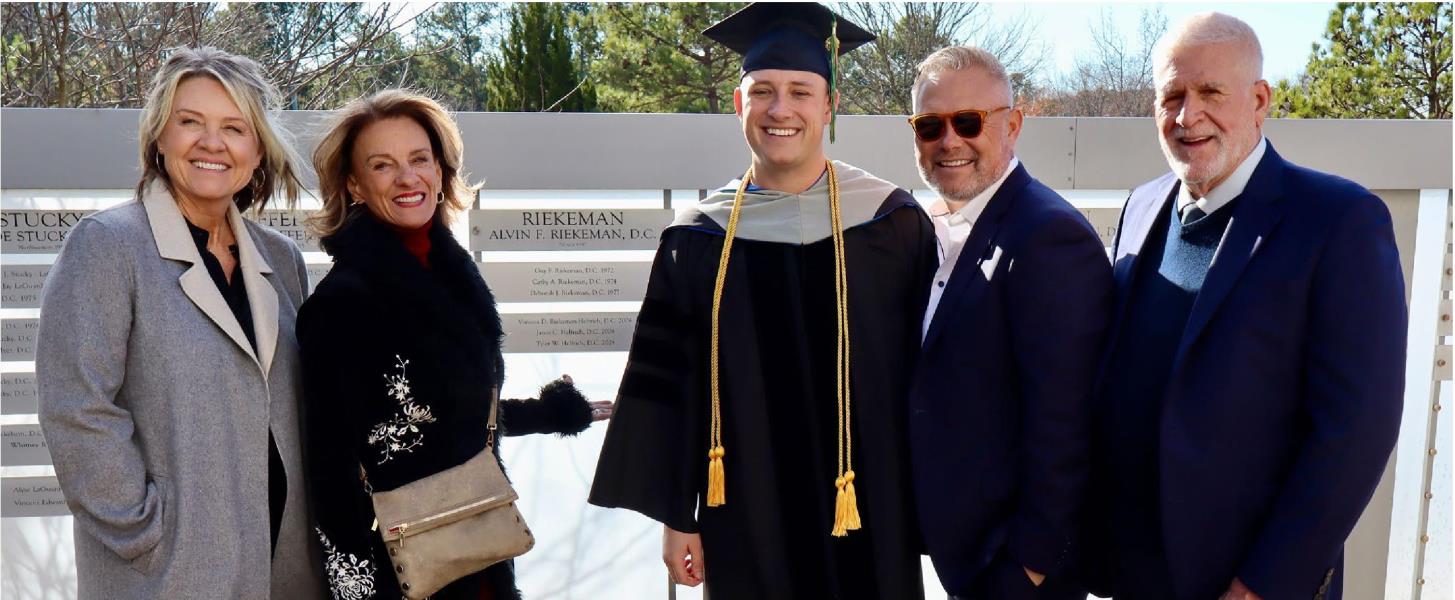 Recent graduation of Dr. Tyler Helfrich, 4th generation chiropractor. Included in the image are his parents Dr. Vanessa and Dr. Jason Helfrich, and his maternal grandparents Dr. Deborah Riekeman and Dr. Guy Riekeman.
Guy's influence moved from the seminar circuit into the heart of chiropractic education when he took on leadership roles at Palmer College of Chiropractic, ultimately serving as President and then Chancellor of Palmer Chiropractic University. At Palmer he carried a dual responsibility: to honor the heritage of the profession's birthplace while preparing it for a rapidly changing world.
He pushed for curricular innovation, stronger communication of chiropractic's distinct identity, and a deeper integration of philosophy and practice. Under his leadership, Palmer did not retreat into nostalgia; it leaned into the future, guided by the conviction that a principled profession must also be a progressive one. His tenure at Palmer established him not only as a gifted communicator, but as a capable institutional leader.
The chapter of Guy's life that most shaped my own began when he accepted the presidency of Life University in Marietta, Georgia. When he arrived in 2004, Life was recovering from painful crises that had shaken its accreditation, its finances and its confidence. Many wondered whether the institution could survive.
Guy answered that question not with rhetoric, but with relentless action. He worked to stabilize accreditation, rebuild trust with students and faculty, and reconnect the university with its core principles. He championed the philosophy of Lasting Purpose—to give, to do, to love, to serve, from one's own abundance—not just as a motto, but as the guiding standard for decision-making at every level of the institution. His leadership helped Life reclaim its footing and re-emerge as a global center for chiropractic and vitalistic health education.
My own path converged with his in a way I will never forget. In May 2013, he invited me to spend a three-day weekend with him at his ranch in Colorado. Officially, he was exploring whether I might join his executive team at Life University. In reality, he was doing something far more important: he was discerning whether we were aligned in purpose, values and vision.
He picked me up at the airport himself. There was no delegation of that task to an assistant or driver. From the moment I stepped into his Suburban, the conversation flowed easily— about chiropractic, leadership, Life University and the future of the profession. When we arrived at his home and he opened the back of the vehicle, I noticed bags of groceries and several bunches of fresh flowers. Without thinking, I said, "I see you love fresh flowers. So do I." In that simple sentence, something opened between us: two grown heterosexual men sharing not only a profession and a mission, but a love of beauty in their enviromnent.
"By the time those three days ended, it was clear that we were brothers from a different mother—bound by mutual respect, unconditional love and a shared commitment to serve a common purpose, side by side."
Over the next three days, we shared the kitchen as naturally as if we had been cooking together for decades. We chopped, stirred, tasted and created meals side by side, our mutual love of gastronomy expressed as a kind of liturgy of hospitality. The kitchen became a place where titles disappeared and friendship emerged. Between meals, we sat in deep philosophical conversations about values, integrity, the power of Innate Intelligence, our responsibility to grow principled chiropractic and our love of life itself.
What struck me most was not just what he believed, but how fully he lived it. He did not rush our time. He listened as much as he spoke. He probed not only my résumé, but my heart: my commitment to service, my understanding of principle, my willingness to stand for chiropractic even when it was difficult. By the time those three days ended, it was clear that we were, in many ways, brothers from a different mother—bound by mutual respect, unconditional love and a shared commitment to serve a common purpose, side by side.
For me, that weekend was the clearest expression of who Guy really was. He did not simply talk about service; he practiced it by giving his full presence, his home, his tune and his heart to one relationship, knowing that such relationships would ripple outward to benefit thousands of students and patients.
Back at Life University, his vision was expansive. He championed bold campus improvements, strategic growth and international outreach, all while insisting that chiropractic remain the institution's beating heart. Under his leadership, Life regained and strengthened its accreditation, stabilized and then grew enrollment, and reasserted itself as the world's largest single-campus chiropractic program.
He also worked to weave Lasting Purpose into the daily life of the university. It was not enough, in his mind, for students to become competent clinicians; they needed to become servant-leaders, capable of giving, doing, loving and serving from their own abundance in every sphere of life. That philosophy shaped curricula, service projects, campus culture and even the way major decisions were made.
When he transitioned from President to Chancellor, and later Chancellor Emeritus, he did not step away from service; he simply changed the vantage point. He continued to travel, speak, mentor and advocate for Life University and for chiropractic around the globe. His presence on campus and at events remained a steady reminder of where the institution had been and where it was called to go.
Across the profession, people often described Guy as "bigger than life." He could fill a room with his energy, his voice and his ideas. Yet those who knew him closely also saw his tenderness, his vulnerability and the pain he earned from personal losses, including the death of his daughter Alexis. That suffering deepened his empathy and intensified his resolve to help others live fully, love deeply and serve generously while they had the chance.
His love of movies, his joy in cooking, his appreciation for fresh flowers in a room—all these details remind us that he was not a distant icon, but a deeply human man who delighted in beauty, story and shared meals. Those human touches were not separate from his service; they were expressions of it. He created environments in which people felt welcomed, inspired and safe enough to grow.
From New Mexico to Davenport, from the practice setting to global stages, from Palmer's halls to Life University's campus, Guy F. Riekeman lived as a man convinced that chiropractic is not just a profession, but a calling. He believed that when we honor the body's innate intelligence, live by clear values, and commit ourselves to serving others, we participate in something sacred.
His legacy lives on in the institutions he strengthened, the programs he built, the films and books he created, and the countless students and doctors he inspired. But perhaps his greatest legacy is more subtle: the felt sense, in so many lives, of a man whose commitment to service was always palpable—who showed us that to make your life extraordinary is, ultimately, to make it a gift.
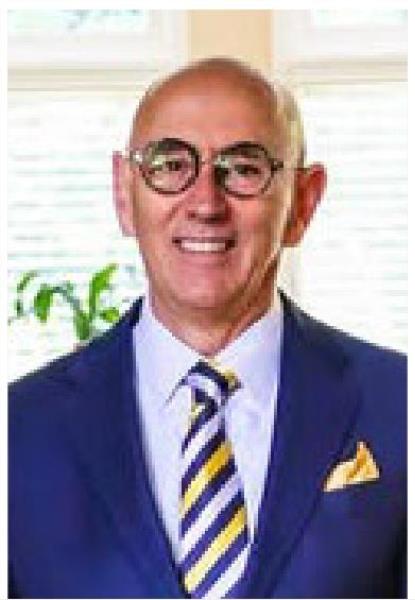
Dr. Gilles LaMarche serves as Vice President of University Advancement at Life University in Marietta, Georgia, where he works to advance the university's mission of vitalistic education and Lasting Purpose.