“The gap between clinical documentation and legal valuation is reshaping personal injury practice.”
FOR DECADES, CHIROPRACTORSTREATING PERSONAL INJURY PAtients have focused on delivering good care, documenting accurately, and trusting that thorough clinical narratives would speak for themselves. Increasingly, they don’t.
Despite appropriate treatment, modern EMRs, and the availability of language-based AI tools, many personal injury cases continue to be undervalued. The American Bar Association has reported that a majority of injury claims are discounted, citing vague or insufficient medical documentation as a leading factor.
Attorneys consistently note that claims are often reduced not because care was inadequate, but because medical records fail to translate injury into a forensic form capable of withstanding scrutiny during valuation, negotiation, and challenge.
Electronic medical records (EMRs) were designed to support continuity of care, compliance, and billing. They do that well, but they were never designed to calculate injury.
EMRs excel at documenting what happened clinically. They do not quantify injury in ways that attorneys, insurers, or reviewers rely on when evaluating claim value.
Narratives — even thorough ones — remain subjective. They vary by provider, lack standardized metrics, and are difficult to defend when challenged.
From a legal perspective, documentation is increasingly judged not by how well it tells a story, but by whether it produces objective, reproducible outputs tied to recognized standards. That expectation is reshaping how injury documentation is interpreted downstream.
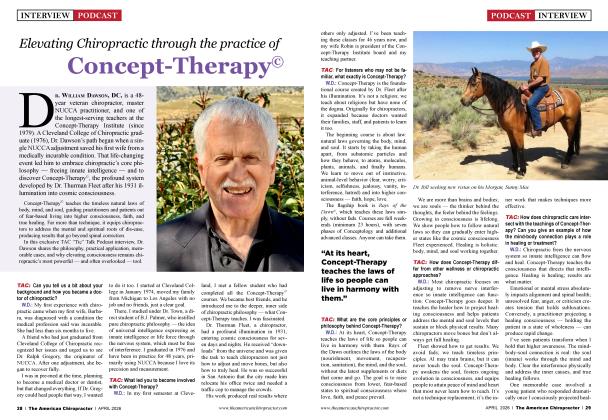
Attorneys operate in a different evidentiary world than clinicians. They must prepare cases for scrutiny by insurers, opposing counsel, and, when necessary, the court.
In that enviromnent, subjective language and free-text narratives are less persuasive than structured findings, impairment metrics, and references anchored to recognized methodologies. This has created what many now recognize as a forensic gap between clinical care and legal valuation.
Doctors are doing the work. Attorneys are struggling to use it. Bridging that gap requires a new approach that preserves clinical judgment while translating findings into formats that withstand challenge.
Much of the recent conversation around artificial intelligence in health care has centered on automation, speed, or documentation efficiency. Large language models, such as those used for text generation and natural language processing, are designed to assist with language, not to perform clinical decision support.
In personal injury cases, these systems lack the metrics, algorithms, and clinical decision-support frameworks required to translate the functional effects of injury into compensable, recoverable values relied upon by attorneys when formulating demands.
Modem artificial intelligence clinical decision-support systems (CDSS) are being used to assist providers, bringing consistency, completeness, and forensic structure to injury analysis. When properly designed, these systems can integrate:
• Validated trauma inventories.
• Diagnostic logic that reduces omissions.
• Search engines that detect overlooked noneconomic (medical) damages.
• Automated impairment calculations anchored to the AMA Guides.
• Structured forensic report formats aligned with legal sufficiency standards.
The result is not “AI diagnosis,” but Ai-assisted injury analysis that supports clinical conclusions and produces outputs that top medical peers already use and that attorneys already understand.
“Attorneys don’t need better narratives; they need documentation that holds up.”
Unlike language-based AI tools and traditional documentation systems, this platform incorporates a purpose-built AI CDSS designed specifically for personal injury analysis. Rather than rewriting narratives, the CDSS evaluates injury presentations against a broad diagnostic framework commonly encountered in injury litigation and cross-references those findings with patterns observed across large-scale injury claim data.
This process enables the system to identify overlooked conditions and diagnoses, valuation-relevant impairments, and loss-of-function indicators that often escape conventional EMR documentation but significantly impact claim evaluation, negotiation, and settlement outcomes.
One emerging example of this approach is Examiners60, an Al-driven forensic injury analysis platform developed specifically for personal injury cases. Rather than replacing EMRs, systems like this work alongside existing documentation.
They consist of trauma inventories to capture functional loss and injury mechanisms in structured forensic form. The CDSS-added diagnostic support layer assists clinicians in identifying commonly overlooked but clinically supported conditions. Impairment calculations are automated and cite the appropriate AMA Guide references, chapters, tables, DRE, and % IR categories.
The resulting report is not a narrative rewrite; it is a forensic document designed for valuation, review, and challenge.
Attorneys don’t need to understand how these outputs are generated. They only care that they are defensible, reproducible, and grounded in recognized standards.
From an attorney’s perspective, documentation that reduces uncertainty has value.
When injury is clearly quantified — properly anchored, functional loss is documented objectively, and reports are structured for forensic review — cases are easier to evaluate, negotiate, and resolve. As a result, referral behavior is shifting.
Attorneys increasingly seek providers whose documentation functions as a forensic asset rather than a liability. These relationships tend to stabilize over time because the documentation performs reliably under scrutiny.
For chiropractors, this represents a meaningful professional opportunity.
As personal injury practices evolve, forensic literacy is emerging as a new core competency for treating providers. This doesn’t require changing how clinicians treat patients. It requires understanding how injury is interpreted outside the clinic and adopting tools that allow clinical findings to translate into defensible value.
Some chiropractors pursue additional training or certification in injury claim analysis to better understand this interface. Others rely on structured systems designed to embed forensic logic into everyday practice. Either way, the direction is clear.
The future of personal injury documentation will not be defined by longer narratives or better wording. It will be defined by forensic structure, metrics, and defensibility.
Chiropractors who recognize this shift early will be better positioned to support attorneys, protect case value, and maintain relevance in an increasingly scrutinized environment. Those who don’t may continue to do excellent clinical work without seeing its full value realized.

Dr. Frank Liberti is a certified injury claim auditor and forensic injury analyst with a background in clinical practice, medical-legal documentation, and injury economics. He is the founder and CEO of the Academy of Injury Claim Auditors and a forensic software developer focused on bridging the gap between clinical findings and legal valuation in personal injury cases. His work centers on translating injury into structured, defensible evidence relied upon by attorneys, insurers, and courts. Additional educational materials related to this topic are available at www.examiner360.info