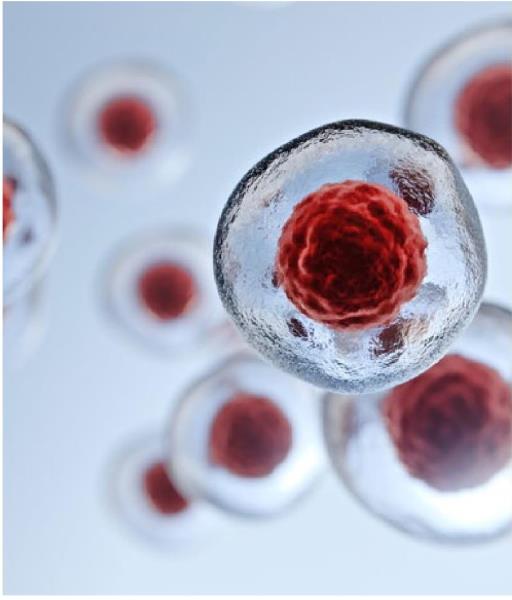
MESENCHYMAL STEM CELLS ARE A PROMISING REGENerative medicine approach because they can repair damaged tissues and support a regenerative environment through their modulation of the immune system and rejuvenation of damaged cells.1
Recent studies have demonstrated that most of the therapeutic effects of MSCs are derived from the extracellular vesicles (EVs) that they secrete. Their cargo includes anti-inflammatory cytokines, growth factors (e.g., VEGF, TGF-P), and microRNAs that suppress inflammation, promote angiogenesis, and stimulate resident stem cells.2
“Recent studies have demonstrated that most of the therapeutic effects of MSCs are derived from the extracellular vesicles (EVs) that they secrete.”
One unique aspect of MSC-EVs is their intrinsic ability to home to sites of injured tissues. This homing is controlled by a combination of biochemical signaling and vascular dynamics.3
Following tissue damage, local cells release a range of pro-inflammatory chemokines and cytokines, such as TNF-a, IL-Ip, and CXCL12. These signaling molecules form a “chemical trail” or gradient that attracts circulating MSC-EVs.4
MSC-EVs possess receptors on their surface that can sense these signals and move toward higher concentrations. One of the best-characterized examples is the CXCR4 receptor, which recognizes CXCL12. This interaction functions much like a homing beacon, directing MSC-EVs precisely to damaged tissue.4-5
Upon arriving near the damaged tissue, MSC-EVs must cross the blood vessel wall to reach injured cells. During inflammation, the inner lining of blood vessels called the endothelium becomes activated and expresses adhesion molecules, such as VCAM-1 and IC AM-1.6
Those molecules act as docking sites for MSC-EVs, which express complementary surface proteins called integrins and tetraspanins that enable them to attach firmly to the blood vessel wall. Following attachment, the EVs can pass through the endothelium into the surrounding tissue, a process known as transendothelial migration.6
Once within the damaged tissue, MSC-EVs are taken up by local cells through membrane fusion or by engaging specific receptors that allow direct delivery of their therapeutic cargo. This enables the vesicles to exert potent anti-inflammatory and regenerative effects.
For example, MSC-EVs interact with receptors such as TIM4 on macrophages and toll-like receptors (TLR2, TLR4) on other immune cells, modulating infl ammatory signaling and promoting a shift toward a reparative phenotype. They also recognize receptors, such as CD73, CD90, and CD44, on fibroblasts and epithelial cells, stimulating wound healing, extracellular matrix remodeling, and tissue regeneration.7-8
By homing precisely to areas of tissue damage and delivering bioactive molecules into target cells, MSC-EVs are powerful cell therapies for regenerative medicine.
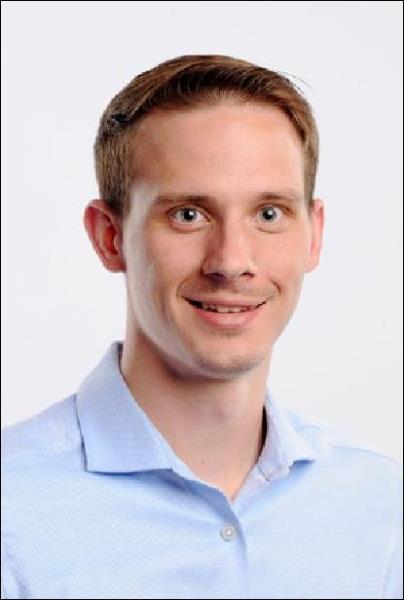
Dr. Sean Vandersluis earned his PhD in Biochemistry from McMaster University in 2024, where he investigated how stem cell biology underlies cancer progression. His research led to the discovery of novel therapeutics targeting cancer stem cells and the development of a personalized medicine platform based on cancer stem cell biology. [email protected]. To learn more about cell based therapies go towww.NuvoCellBiologics.com.
References
1. Kou M, Huang L, Yang J, Chiang Z, Chen S, Liu J, Guo L, Zhang X, Zhou X, Xu X, Yan X, Wang Y, Zhang J, Xu A, Tse HF, Lian Q. Mesenchymal stem cell-derived extracellular vesicles for immunomodulation and regeneration: a next generation therapeutic tool? Cell Death Dis. 2022 Jul 4;13(7):580. doi: 10.1038/ s41419-022-05034-x. PMID: 35787632; PMCID: PMC9252569.
2. Maqsood M, Kang M, Wu X, Chen J, Teng L, Qiu L. Adult mesenchymal stem cells and their exosomes: sources, characteristics, and application in regenerative medicine. Life Sei. 2020 Sep 1:256:118002. doi: 10.1016/j. lfs.2020.118002. Epub 2020 Jun 29. PMID: 32585248.
3. Karp JM, Leng Teo GS. Mesenchymal stem cell homing: the devil is in the details. Cell Stem Cell. 2009 Mar 6;4(3):206-16. doi: 10.1016/j. stem.2009.02.001. PMID: 19265660.
4. Elemam NM, Hannawi S, Maghazachi AA. Role of chemokines and chemokine receptors in rheumatoid arthritis. Immunotargets Ther. 2020 Mar 9:9:43-56. doi: 10.2147/ ITT.S243636. PMID: 32211348; PMCID: PMC7074856.
5. Hocking AM, Gibran NS. Mesenchymal stem cells: paracrine signaling and differentiation during cutaneous wound repair. Exp Cell Res. 2010 Aug 15;316(14):2213-9. doi: 10.1016/j.yexcr.2010.05.009. Epub 2010 May 13. PMID: 20471978; PMCID: PMC2902653".
6. Teo GS, Ankrum JA, Martinelli R, Boetto SE, Simms K, Sciuto TE, Dvorak AM, Karp JM, Carman CV. Mesenchymal stem cells transmigrate between and directly through tumor necrosis factor-a-activated endothelial cells via both leukocyte-like and novel mechanisms. Stem Cells. 2012 Nov;30(ll):2472-86. doi: 10.1002/stem.ll98. PMID: 22887987; PMCID: PMC3479371.
7. Zhang FF, Hao Y, Zhang KX, Yang JJ, Zhao ZQ, Liu HJ, Li JT. Interplay between mesenchymal stem cells and macrophages: promoting bone tissue repair. World J Stem Cells. 2024 Apr 26;16(4):375-388. doi: 10.4252/ wjsc.vl6.i4.375. PMID: 38690513; PMCID: PMC11056637.
8. Dymowska M, Aksamit A, Zielniok K, Kniotek M, Kaleta B, Roszczyk A, Zych M, Dabrowski F, Paczek L, Burdzinska A. Interaction between macrophages and human mesenchymal stromal cells derived from bone marrow and Wharton's jelly: a comparative study. Pharmaceutics. 2021 Nov 1;13(11):1822. doi: 10.3390/pharmaceuticsl3111822. PMID: 34834238; PMCID: PMC8624657.