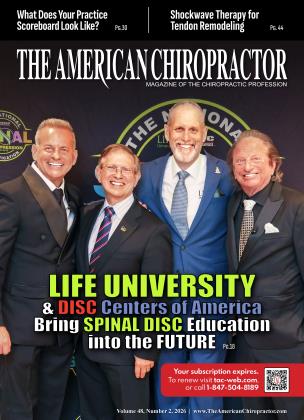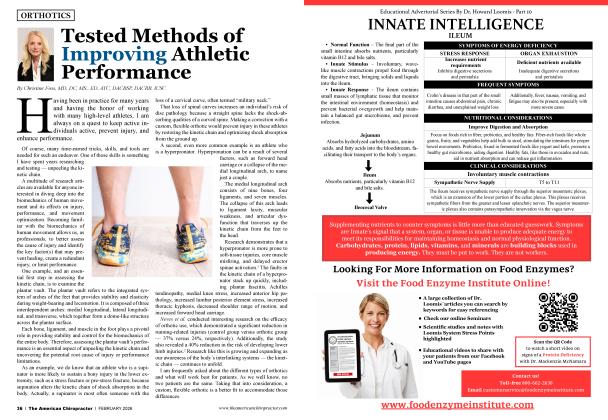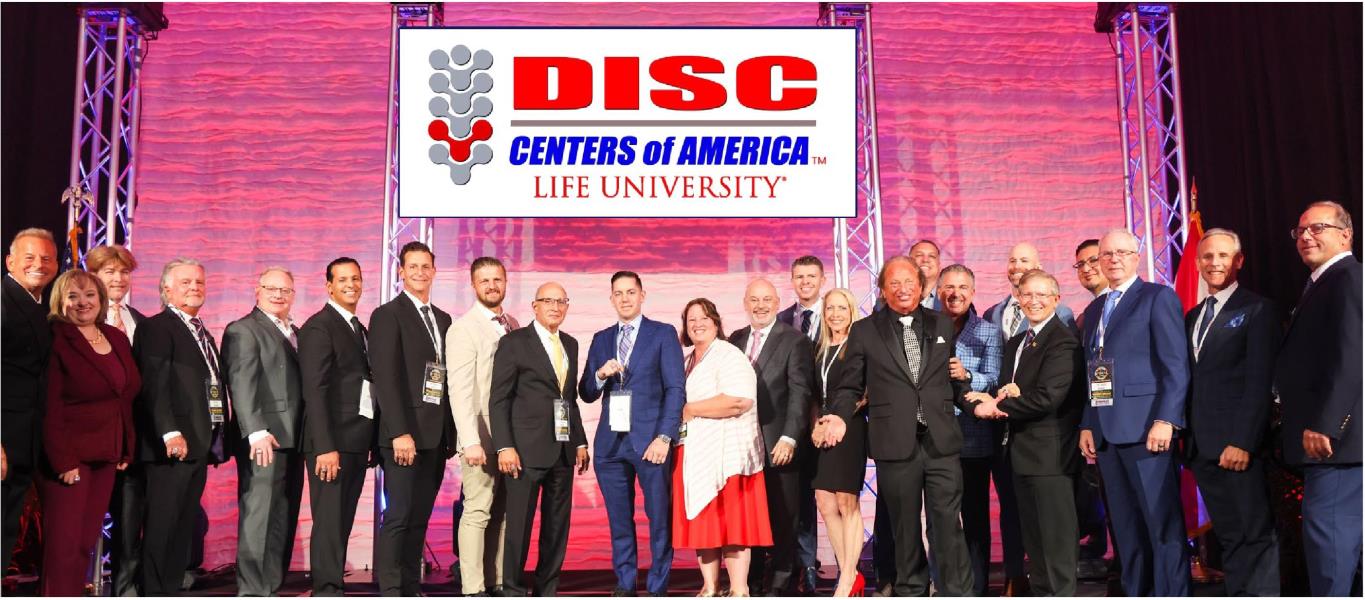
In this podcast interview from The American Chiropractor (TAC), hosts Dr. Joe Busch and Jaclyn Touzard engage with leaders from Disc Centers of America (DCOA) and Life University to explore a groundbreaking partnership. Co-CEOs Dr. Eric Kaplan AND Dr. Perry Bard join Life University President Dr. Brian McAulay, Board Chairman Dr. Kevin Fogarty, International Affairs Director Dr. John Downes, and Clinic Director Dr. Tim Gross. Recorded before the February 2026 grand opening, their discussion focuses on how Life University has embedded DCOA’s nonsurgical spinal decompression protocols into their curriculum, aligning seamlessly with the university’s “lasting purpose” mission — to give, to do, to love, and to serve out of a sense of abundance. This innovative collaboration aims to empower future chiropractors with advanced research-backed tools for disc care that will foster philosophical depth, clinical excellence, and professional success while elevating the entire profession.
KAPLAN: Dr. Bard and I are thrilled about the future of our profession. We’ve long believed the “middle class” of chiropractic has eroded, and what we teach emphasizes that the “D” in doctor stands for diagnosis and the “R” for results. Decompression elevates doctors by enabling precise diagnoses — distinguishing subluxations from bulging or herniated discs, each requiring tailored treatment.
Partnering with Life, the largest and, in our view, premier chiropractic university, is revolutionary. Life’s mission to give, do, love, and serve resonates deeply with us. Most schools focus on the subluxation complex, central to chiropractic, but many overlook nuances like the sacral shear, which Dr. Norman Shealy, M.D., Ph.D, and Harvard-trained neurosurgeon taught us is essential for optimal decompression outcomes.
This curriculum inclusion equips Life students with a fuller understanding of subluxation histopathology, neuropathology, myopathology, and bone-nerve dynamics. We’re dedicating resources to research, collaborating with Dr. Fogarty, Dr. McAulay, Dr. Downes, and Dr. Gross. It positions chiropractic as primary care with chiropractic first, drugs second, surgery last. We start with the subluxation, progress to disc bulging and then disc herniations, making doctors better clinicians, not salespeople. Dr. Bard and I see this as a family passion — our sons are both chiropractors in the field — and it embodies Life’s abundant service by generating research to affirm chiropractic’s efficacy
MCAULAY: Thank you. Life has always championed philosophical depth alongside clinical mastery, with students renowned for their skilled subluxation corrections. Yet, we’re equally committed to innovation, making this partnership a natural fit. Life’s mission — to give, do, love, and serve from abundance — guides everything, reminding us that true service flows from overflowing resources, not scarcity.
Decompression aligns with a growing body of research supporting it within the chiropractic paradigm. With hundreds of DCOA centers nationwide, we’re ensuring graduates are versatile, ready for solo practices, group models, interprofessional collaborations, or organizational roles. Historically, options were limited to general practice; today, students face a spectrum, and we want them equipped for all — always delivering superior chiropractic care.
This curriculum integration introduces decompression as a core, cutting-edge modality, blending hands-on adjustment with technology-driven disc therapy. Students will engage in certified protocols, research, and patient care at our revamped clinics, fostering abundance by expanding their capacity to heal. It’s about empowering them to thrive clinically, financially, and philosophically, serving patients holistically while advancing the profession’s influence.
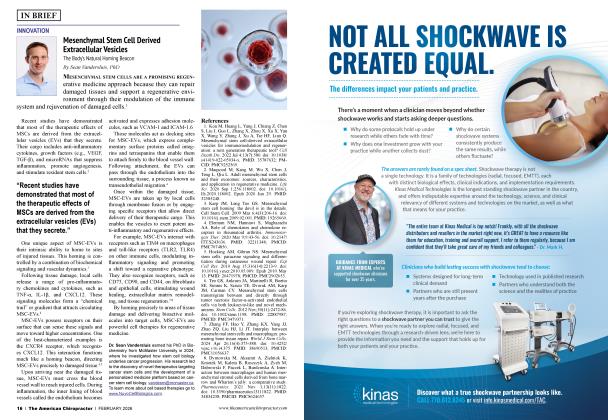
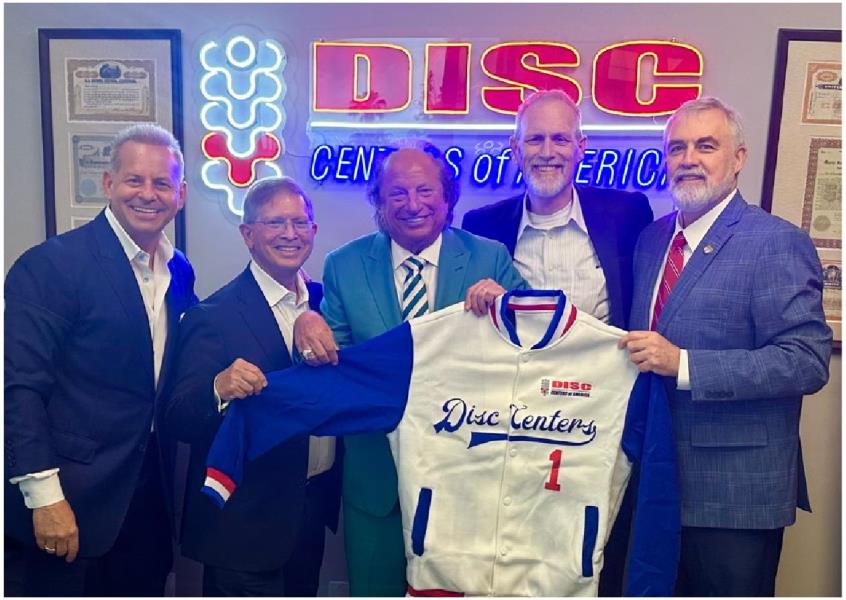
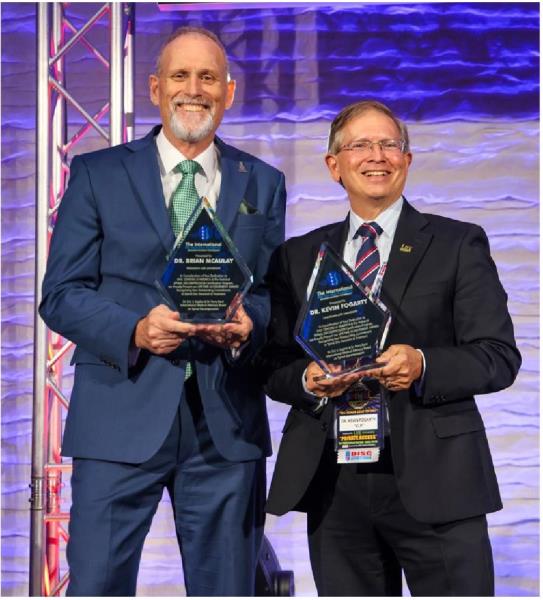 Dr. Brian McAulay & Dr. Kevin Fogarty receiving the International Disc Education Association Award
FOGARTY: Celebrating 40 years in practice this year, I’ve always sought evidence-based ways to serve patients better, staying rooted in chiropractic philosophy — earning my Ph.D through Pahner with influences like Fred Barge and Guy Riekeman.
Three to four years ago, we introduced spinal decompression after researching outcomes and reconnecting with Dr. Kaplan. His programs were transformative, revealing how subluxations progress to bulges and herniations, accelerating patient recovery.
Starting with one table, we now have three — and eyeing a fourth — following DCOA’s research-backed protocols, including Dr. Shealy’s sacral insights. Growth exploded, but more importantly, it deepened our service; patients heal faster, avoiding surgery’s risks.
As chairman, I championed this for Life because it minors our mission of abundant giving. Students burdened by debt need tools for immediate impact — certified decompression skills mean better diagnoses, results, and practices that pay down loans while serving profoundly.
This isn’t peripheral; its core to preparing graduates as “disc chiropractors,” embodying abundance by sharing knowledge freely. DCOA’s protocols ground students in biomechanics, philosophy, and business, ensuring they graduate not just competent but also compelled to serve without limits.
KAPLAN: Absolutely. Chiropractors must offer nonsurgical solutions first. Back surgeries succeed only about 50% of the time, birthing “failed back surgery syndrome,” an epidemic we can prevent. Decompression treats severe cases effectively, often post-surgery, by addressing root causes like residual disc leakage or adjacent segment issues.
In Life’s curriculum, our protocols teach progression: — subluxation to disc bulging to disc herniation, integrating Dr. Shealy’s sacral emphasis. Pioneered by MDs like Allen Dyer (defibrillator inventor and Canadian Health Minister) and Dr. Shealy, it’s medically validated. Studies like Boudreaux, McClure, and Boxell-Martin affirm discs’ self-healing potential, echoing chiropractic’s innate healing principle
We’re donating research studies, books, and training to Life, waiving fees to reflect abundance. Students learn medical research, earning endorsements from orthopedists and neurosurgeons. This shifts paradigms — chiropractic leads on disc care.
For Life’s mission, it’s service amplified. Graduates heal more, serve broader populations, and research through Life’s center, creating the first university-led decompression study. It’s evolution — from Chiropractic 1.0 to a legacy of abundance, where touch meets technology for unparalleled results.
GROSS: At its heart, this isn’t about equipment — it’s people, embodying Life’s mission to serve abundantly by restoring hope and vitality. Palmer graduate that I am, I’ll lead the Roswell clinic, integrating DCOA protocols without overhauling intakes. We’ll maintain our patient-first approach but expand via targeted decompression for disc issues.
Curriculum-wise, students will apply protocols hands on. Precise diagnostics, spinal disc assessments, and sessions proving the body’s extraordinary healing when interference is removed — drug and surgery-free. With on-campus X-rays and nearby MRI referrals, rotations become immersive, certifying students’ pre-graduation.
This expands our patient reach — from chronic pain to post-surgical cases—while teaching abundance; every patient deserves optimal care. Life’s philosophy shines here; spinal decompression supports innate intelligence, letting bodies thrive. Graduates emerge confident, serving with compassion and competence, multiplying the mission’s impact.
BARD: As a proud Life grad from the “Life College” era — classmates with Dr. Downes — I’ve earned the “lasting purpose” mission of give, do, love, serve from abundance. It wasn’t just words; it was a call to elevate chiropractic as science, art, philosophy, and business.
This partnership synergizes perfectly. Patients facing disc diagnoses — bulging or herniated — often default to opioids, injections, or unnecessary surgery. DCOA’s protocols offer evidence-based alternatives — targeted, documented decompression yielding superior outcomes. Life’s genius? Integrating this into their curriculum — hands-on training, research grounded, technology supported investment — at their clinics.
Students become “disc chiropractors,” creating portals for high-quality patients in cash-based models that foster independence and abundance. Our Google dominance (top organic results for back pain searches) amplifies this, educating globally. For Life’s mission, it’s transformative — future DCs serve more profoundly, avoiding scarcity mindsets, embodying abundance by healing discs and lives. No equal to Life University; I’m biased, but it’s fact
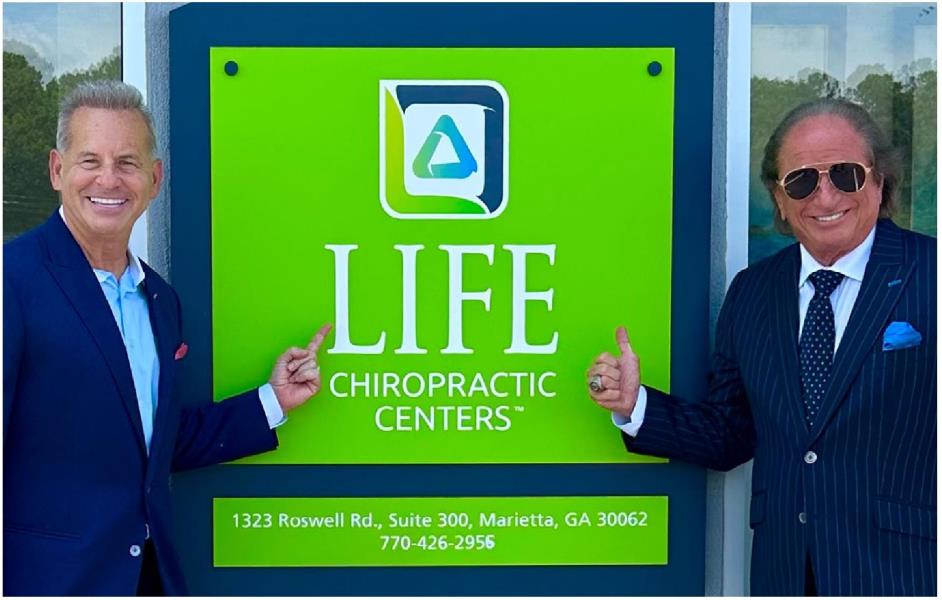
DOWNES: Forty years post-graduation, Dr. Bard remains my energetic alter ego. His zeal complements my quieter focus on global and institutional outreach. Coordinating via Life Chiropractic Centers, I’m bridging DCOA with campus clinics for this Roswell launch.
DCOA’s protocols extend chiropractic theory. Mechanical aid removes interference, unleashing innate potential — far better than surgeons’ 50/50 knives. Curriculum certification is key; students achieve it pre-graduation, entering “peak opportunity” externships competent, not curious.
This embodies abundance; certified grads serve domestically and abroad, where disc issues plague billions. Globally, we’re exporting protocols, research, and philosophy. Life’s mission thrives — serving without borders, fostering healers who give endlessly from overflowing knowledge.
MCAULAY: Our research center is pivotal. This partnership hypothesizes innovatively from chiropractic lenses, accessing clinic data for robust studies. Randomized trials aren’t always ideal; personalized care demands diverse methods.
We’ll expand literature, validating decompression’s role, boosting chiropractic’s scope. It’s abundant service — knowledge shared freely, healing multiplied.
BARD: February 27 marks the Roswell Clinic’s rebirth as Life Universitebruary 27th marks the Roswell Clinic’s rebirth officially as the Life University Disc Centers of America Center — outpatient disc care hub and educational epicenter. Students dive in immediately — protocols, certifications, handson from day one, growing into confident servants.
Followed by our new eighthour Neuropathy-Decompression CEU program on February 28th (visit NeuropathyCertified, org) — featuring top neurologists — linking disc-nerve synergies. October’s Life Universities National Spinal Decompression Certification event funnels proceeds back to Life. Long Term. It perpetuates abundance — cash models, freeing doctors to serve boldly as our footprint educates masses. Touch and technology converge for results. Life leads, our profession rises.
MCAULAY: Grateful for DCOA’s generosity — donations, waived fees, equipment aid. As a non-profit, this abundance fuels our purpose.
FOGARTY: Echoing that, DCOA lives Life’s ethos. October proceeds support us; hats off for selfless service.
KAPLAN: Dr. Bard and I are proud to be considered among the pioneers of modem non-surgical spinal decompression, driven in part by the goal of putting disc care in the hands of chiropractors. We were taught chiropractic first, drugs second, and surgery last. This is the paradigm we follow and teach our doctors.
Through DCOA, we are working with many of the top decompression chiropractors in the country, many of whom will also be founders of this new clinic—a revolutionary clinic providing the most up-to-date technology and research in the treatment of disc care.
We are proud of the doctors in our profession. This is a legacy-building effort. We are thankful to The American Chiropractor and the Busch family for helping make this visible to the entire profession. Our goal is clear: chiropractors should be the leaders in the care and treatment of disc injuries.
BARD: Life’s purpose inspired us; DCOA’s mantra, “where touch and technology come together for the best patient results” is now theirs. Adjustment first, Decompression second, Surgery last — future in health care’s synergy.
TAC: For more information on the DCOA curriculum available through Life University please visit: Life.edu or call toll free: 888-990-9660.