I HAVE SPENT DECADES EVALUATING HOW CHIROPRACtOTS can deliver care that is clinically consistent, operationally sustainable, and aligned with patient expectations.
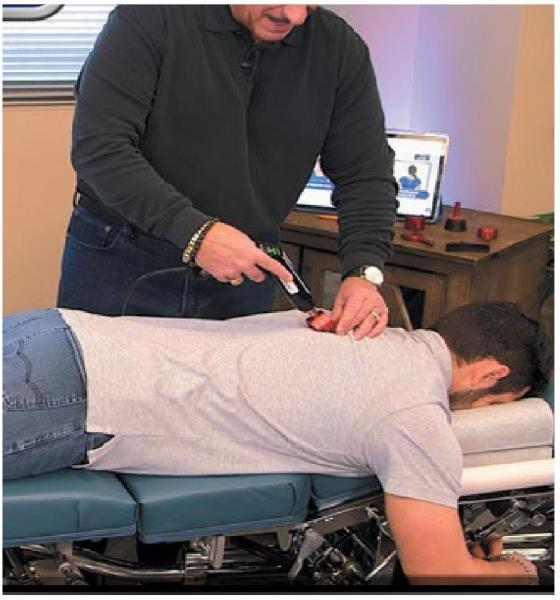
One of the most meaningful evolutions I have observed is the use of instrument assisted adjusting as a core clinical approach rather than an occasional alternative. When applied correctly, it offers tangible benefits to both the doctor and the patient without requiring a fundamental change in chiropractic philosophy.
From the clinician’s perspective, instrument assisted adjusting introduces a level of consistency that is difficult to replicate manually across hundreds of patient encounters each week. The force, speed, and direction of the impulse are delivered with precision, reducing variability between visits and between providers within the same practice. Over time, this consistency can reduce physical wear on the chiropractor, particularly in high volume practices, while supporting longevity in practice, ft also allows for easier delegation and training of associates because the delivery method is standardized rather than dependent on individual strength or body mechanics.
For patients, the benefits are equally compelling. Instrument assisted adjusting delivers a rapid, targeted impulse with minimal preload, which many patients perceive as more comfortable and less intimidating than traditional manual techniques. This can improve acceptance among individuals who are sensitive, apprehensive, older, or new to chiropractic care. Increased comfort often leads to better adherence to recommended care plans, which is essential for achieving meaningful clinical outcomes.
The scientific literature has examined mechanically assisted adjusting across several common spinal conditions. A randomized clinical trial by Wood et al. (2001) found that mechanically assisted manipulation and manual manipulation were both associated with improvements in pain, disability, and cervical range of motion in patients with mechanical neck pain. Similarly, Shearar et al. (2005) reported that mechanically assisted adjustments and high velocity low amplitude manipulation both resulted in reduced pain and disability in patients with sacroiliac joint syndrome.
In my experience, instrument assisted adjusting represents a convergence of clinical intent, patient comfort, and professional sustainability. When chiropractors can deliver precise, repeatable care that patients readily accept, the practice benefits extend far beyond the treatment room.
Dr. Moe Pisciottano is the CEO of the Pro-Adjuster Group and has been a practicing chiropractor in Pittsburgh, Pennsylvania, for 35 years. Dr. Pisciottano is the first and only chiropractor to receive the coveted Ernst and Young Entrepreneur of the Year award. To learn more, visit LearnProAdjuster.com.
1. Huggins, T, Boras, A., Gleberzon, B., Popescu, M., & Bahry, L. (2012). Clinical effectiveness of the activator adjusting instrument in the management of musculoskeletal disorders: A systematic review of the literature. Chiropractic & Manual Therapies, 20(8)
2. Shearar, K. A., Colloca, C. J., & White, H. L. (2005). A randomized clinical trial of manual versus mechanically assisted manipulation in the treatment of sacroiliac joint syndrome. Journal of Manipulative and Physiological Therapeutics, 28(7), 493-501.